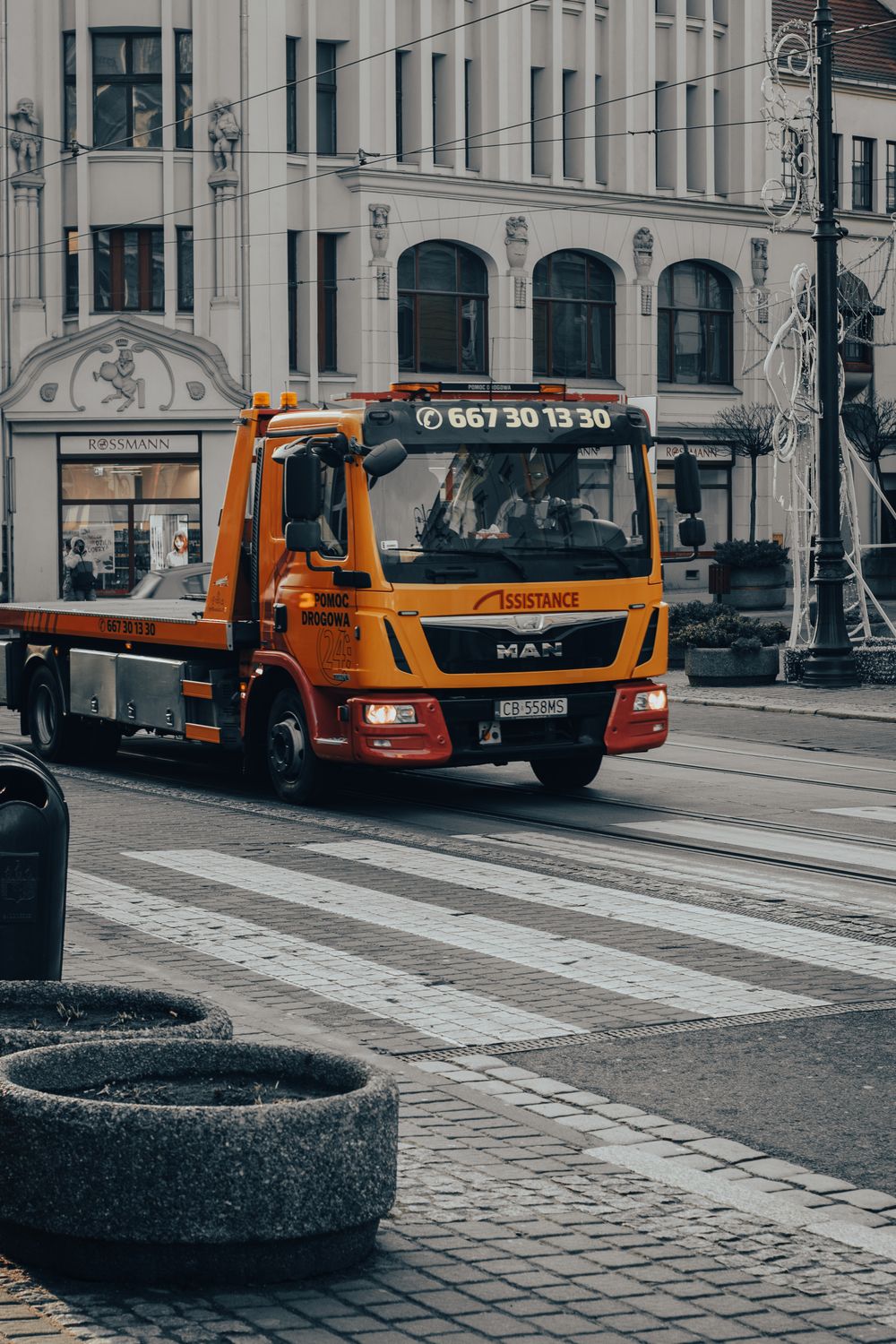
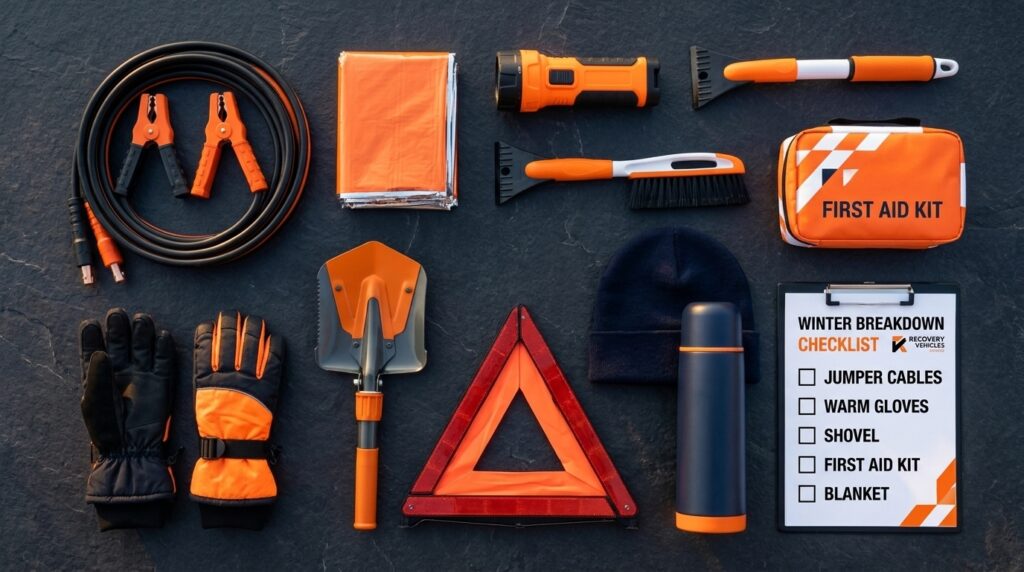
A good winter car kit does four jobs: keeps you warm, keeps you seen, keeps your phone alive and helps get the car moving again. In practice that’s a blanket and spare warm layers, a hi-vis vest and torch, a charged power bank, an ice scraper, a small shovel, water and snacks. Keep the warm things in the cabin, not the boot.
A typical winter call: a hatchback in a B-road lay-by after dark, flat battery, driver in work shoes, phone on 5%, blanket packed in the boot under the shopping. Nothing dangerous yet. But that’s a long, cold wait, whoever is on the way.
Here’s what to pack, where to keep it, and what to do if you do get stuck.
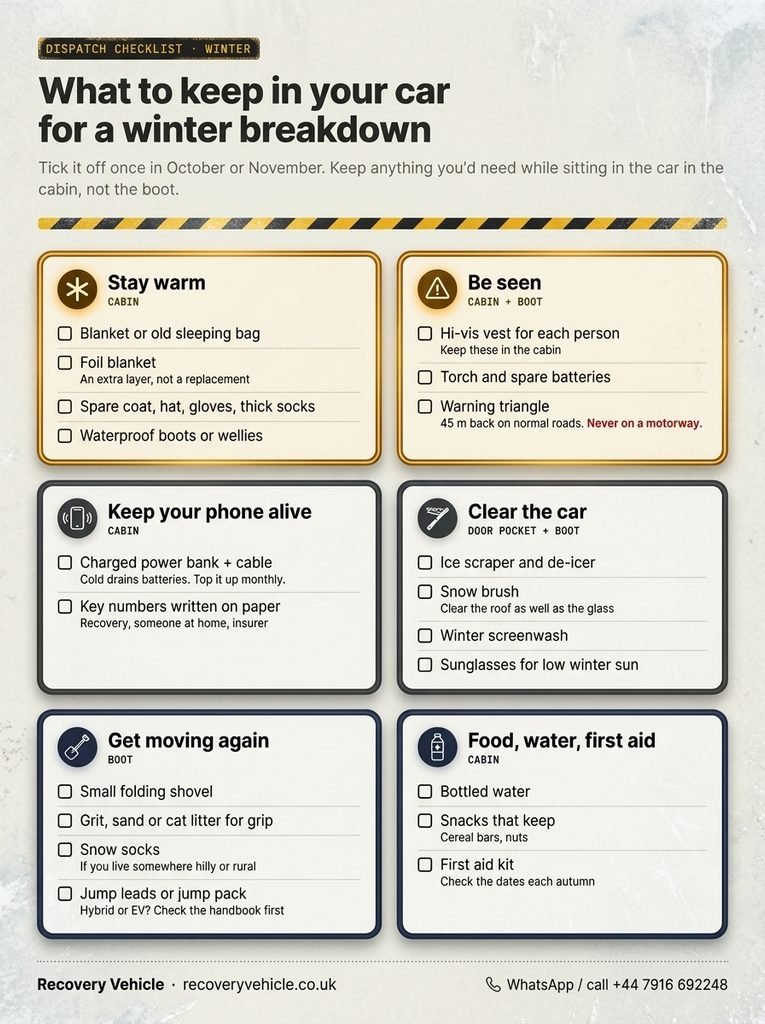
What to keep in your car in winter
To keep you warm
- A proper blanket or an old sleeping bag. It’s the single most useful thing in the car when the engine’s off.
- A foil blanket or two. Light and cheap, but an extra layer, not a replacement.
- A spare coat, hat, gloves and thick socks. The heater stops when the engine does, and the cabin cools quickly.
- Waterproof boots or wellies. Office shoes on snow are how people slip on the verge.
To keep you seen
- A hi-vis vest for everyone you usually carry. Put it on before you get out, not after.
- A torch with spare batteries. Your phone torch eats the battery you need for calls.
- A warning triangle, for ordinary roads only. The Highway Code says to place it at least 45 metres behind the car on the same side of the road. Never put one out on a motorway.
To keep your phone alive
- A charged power bank and the right cable. Cold drains phone batteries faster, so keep the power bank in the cabin and top it up every month.
- Key numbers on paper. Your recovery number, someone at home, and your insurer. Phones die; paper doesn’t.
To clear the car
- Ice scraper and de-icer. You must be able to see out of every window before you drive.
- A snow brush. Clear the roof too. Snow left up there can slide onto your screen when you brake, or blow onto the car behind.
- Winter screenwash. Plain water freezes in the bottle and on the glass.
- Sunglasses. Low winter sun on a wet road can blind you for seconds at a time.
To get moving again
- A small folding shovel to clear snow away from the driven wheels.
- A bag of grit, sand or cat litter to put under the tyres for grip.
- Snow socks if you live somewhere hilly or rural.
- Jump leads or a charged jump pack. Quick tip: if you drive a hybrid or EV, check the handbook before using it to jump another car. Many manufacturers say not to.
Supplies and first aid
- Bottled water and snacks that won’t go off. Cereal bars and nuts keep for months. A flask of something hot if snow is forecast for a long drive.
- A first aid kit, checked every autumn for anything out of date.
Where to keep each item in the car
Anything you’d need while sitting in the car belongs in the cabin. Anything you’d only use outside can live in the boot.
The bit people forget is that the boot isn’t always reachable. It might be against a snowbank. On a hard shoulder, standing behind your car is the last place you want to be. So the blanket, coat, hi-vis, torch, power bank and snacks go in the door pockets or a bag on the back seat.
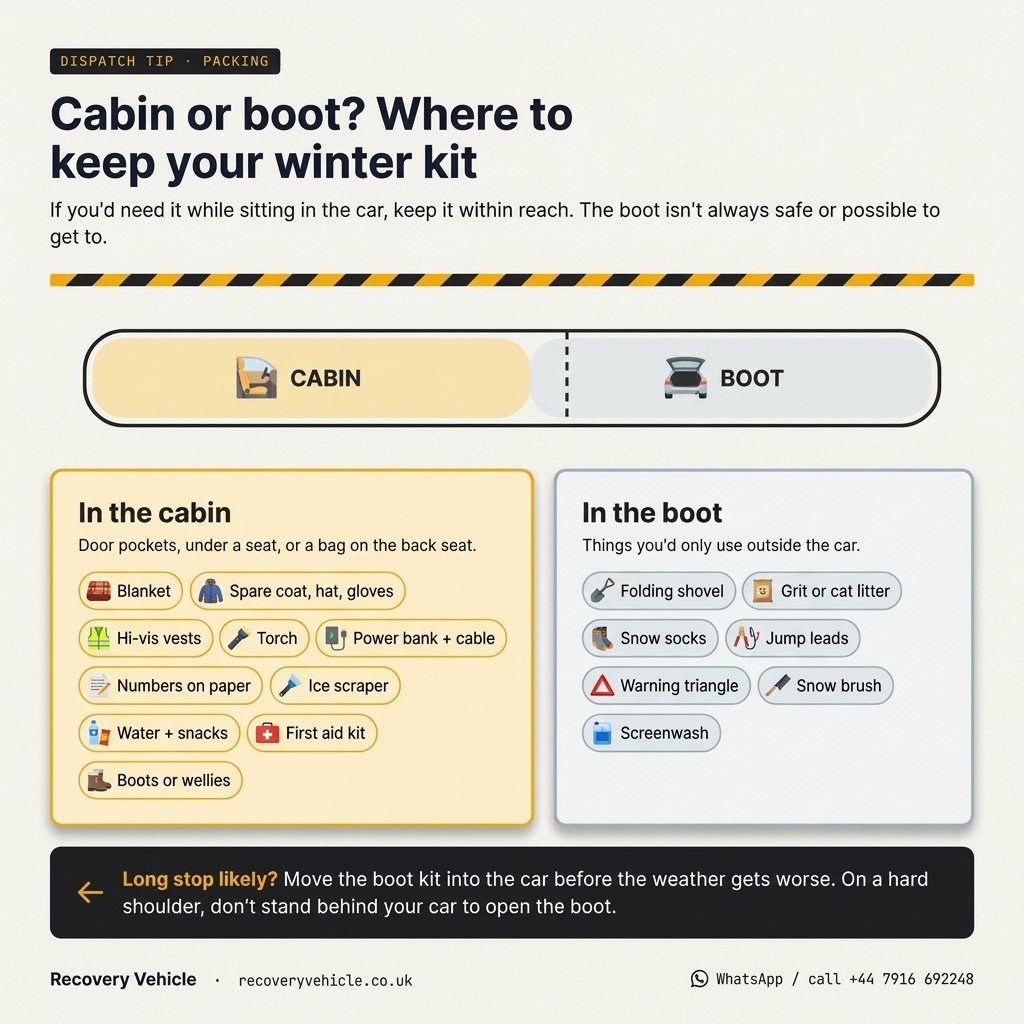
If a long stop looks likely, move the boot kit into the car before the weather gets worse.
If you’re stuck in snow or broken down in the cold
Get somewhere safe if you can and make yourself visible. Then stay with the car unless help is close and you can reach it safely. Before you run the engine for heat, clear the exhaust.

- Hazards on. If the car still moves, get it off the road, into a lay-by or onto the hard shoulder.
- On a motorway: if it’s safe, get out by the passenger side, put on your coat and hi-vis, and wait behind the barrier. Don’t put a triangle out. If you can’t get out safely, stay in with your seatbelt on and hazards on, and call 999.
- On other roads: put the triangle out at least 45 metres behind if you can do it safely.
- Before running the engine for warmth, check the exhaust pipe is clear of snow. If it’s blocked, carbon monoxide can build up inside the car, and you can’t see or smell it. Run the engine in short bursts with a window open a crack, and check the pipe again if snow keeps falling.
- Stay with the car. It’s shelter, and it’s much easier for us to find than a person walking along a dark road.
- Call for help with your reg, exact location (what3words or the number on the nearest motorway marker post works well), what’s wrong and how many people are with you.
From the cab: tell us when you call if it’s an automatic, an EV or a 4×4. It changes which truck we send, and getting that right first time saves you a long second wait. More on how that works on our breakdown recovery page.
If you drive an electric car
An EV is usually a decent place to sit out a long jam. It only needs power for heat, not to keep an engine idling. The skill is using that power carefully.
- Use the seat and steering-wheel heaters before full cabin heat. They draw far less power.
- Warm the car up while it’s still plugged in before a winter drive, so the heat comes from the mains, not the battery.
- Start long winter drives with more charge than you’d use in summer. Cold weather cuts range.
Worth knowing: you can’t hand an EV a can of fuel. If the battery does run flat, it goes on a flatbed with all four wheels off the road, to a charger or home. Our EV recovery page explains why.
Check your kit before the cold arrives
Once a year, in October or November, go through it: charge the power bank, swap the torch batteries, top up the winter screenwash and check the first aid kit dates.
One honest limit. A kit makes a breakdown safer and more bearable, but it doesn’t stop one. Good tyres and a healthy battery do most of that. And in heavy snow, a road that’s closed is closed to recovery trucks too, which is exactly when your kit matters most.
Broken down in the cold? Hazards on and stay warm. Then send us your reg and location on WhatsApp at +44 7916 692248. We’ll come back with a price before anyone sets off. Need help any hour? See 24 hour car recovery.